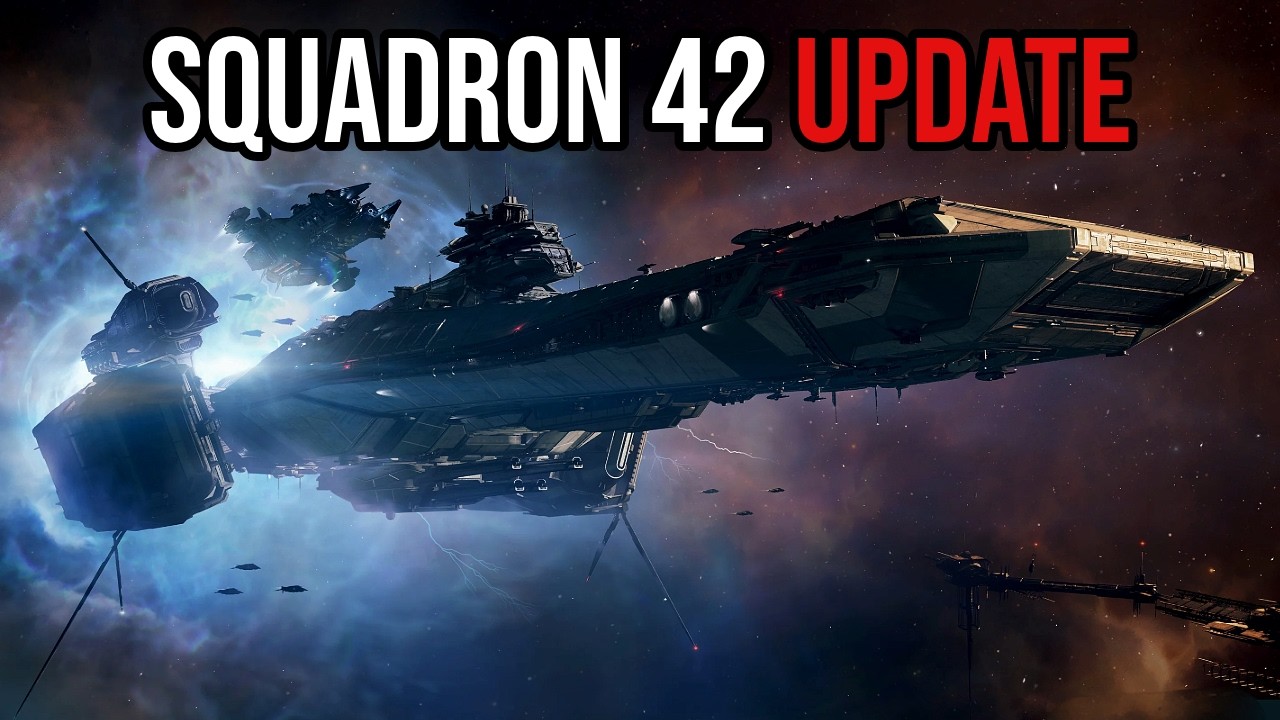
Squadron 42 — Final Phase Status
Squadron 42 is no longer in early development.
It is now in its final production phase.
Cloud Imperium Games has confirmed the project is feature complete — meaning the full game is built, playable, and structurally finished.
What remains is execution.
Feature Complete — What It Actually Means
Feature complete is often misunderstood.
It does not mean finished.
It means:
- All gameplay systems are implemented
- All missions are playable end-to-end
- Core mechanics are locked
From this point forward, no major systems are added.
Only refined.
build phase is over
polish phase begins
Current Phase — Polish and Stabilization
All development effort is now focused on refinement.
Key areas:
- Bug fixing across all gameplay layers
- Performance optimization (CPU / GPU / streaming)
- Animation timing and cinematic transitions
- UI clarity and responsiveness
- Audio sync and final mastering
This is where most AAA games either succeed — or break.
Game Structure
Squadron 42 is not a sandbox.
It is a linear, cinematic campaign.
You play as a UEE Navy recruit progressing through a structured military narrative.
Each chapter combines:
- Story-driven sequences
- Space combat
- FPS missions
- Crew interaction
The experience is tightly controlled.
Designed for immersion — not freedom.
Seamless Gameplay
One of the core technical goals is continuity.
No hard transitions.
You move between:
- Ship interiors
- Space flight
- On-foot environments
…without loading screens.
Everything exists in one continuous layer.
gameplay and cinematic are the same system
AI Systems
AI has been one of the most heavily developed systems.
Not just enemies — but the entire world.
Includes:
- Crew members with contextual behavior
- Enemy pilots reacting dynamically
- FPS AI using cover and positioning
Encounters are not scripted.
They are simulated.
Cinematic Pipeline
Squadron 42 is built around full performance capture.
Not just voice acting.
Full-body acting.
Facial detail.
Timing.
All integrated directly into the engine.
Actors include:
- Mark Hamill
- Gary Oldman
- Gillian Anderson
- Henry Cavill
- Andy Serkis
These are not “cutscenes”.
They are part of gameplay.
StarEngine — Core Technology
The game runs on StarEngine.
A heavily modified engine built from CryEngine foundations.
Capabilities include:
- Real-time cinematic rendering
- Large-scale environments
- Seamless system streaming
- High-fidelity character detail
This is the backbone of both Squadron 42 and Star Citizen.
Physicalized Simulation
Nothing is abstracted.
Everything is a system.
Ships are built from components.
Damage is localized.
Power distribution matters.
This affects:
- Combat outcomes
- Ship behavior
- Player decisions
the game simulates — it does not fake
Mission Design
The campaign is structured into sequences.
Typical flow:
- Briefing
- Deployment
- Combat / objective
- Extraction
Gameplay Variety
You are not doing one thing repeatedly.
The game rotates between:
- Dogfighting
- Capital ship battles
- Boarding actions
- FPS combat
- Zero-G traversal
This maintains pacing across the campaign.
Visual Fidelity
Recent internal showcases indicate significant upgrades.
Rendering
- Improved global illumination
- Volumetric lighting systems
- Real-time reflections
Characters
- High-detail facial animation
- Subtle performance capture data
- Realistic eye movement and skin shading
Environments
- Fully explorable ship interiors
- High-density mechanical detail
- Large-scale capital ships
UI / UX Direction
The UI is moving toward minimalism.
Less overlay.
More in-world interaction.
Includes:
- Reduced HUD clutter
- Diegetic interfaces
- Cleaner combat feedback
information without breaking immersion
Audio Design
Audio is treated as a system.
Not decoration.
Includes:
- Spatial positioning
- Dynamic music layers
- Reactive combat sound
Voice performances are tightly synced with animation.
Relationship to Star Citizen
Squadron 42 and Star Citizen share the same foundation.
But they are separate experiences.
Why Squadron 42 Comes First
- Controlled environment
- Easier to polish
- Validates technology
It acts as a proving ground.
Road to Release
With systems locked, the pipeline is now clear.
Stabilization
Fixing:
- AI inconsistencies
- Physics edge cases
- Mission logic errors
Optimization
Improving:
- Frame stability
- Memory usage
- Asset streaming
QA
Full campaign testing.
Edge cases.
Flow validation.
Final Pass
- Cinematic timing
- Audio balance
- UI refinement
Release Window
There is still no official date.
But the signals are clear.
- Feature complete achieved
- Development scope stabilized
- Focus fully shifted to polish
This is late-stage production.
Expectations
After years of development, expectations are high.
The game must deliver:
- Stability at launch
- Strong narrative pacing
- Reliable AI behavior
- High performance
Remaining Risks
Even now, challenges remain:
- Hardware optimization
- AI edge-case behavior
- Bug elimination at scale
- Balancing cinematic vs control
Final State
Squadron 42 is no longer theoretical.
It exists.
Fully built.
Playable.
Now being refined.
the vision is complete
execution is everything
Closing
The next phase will define the outcome.
Not ambition.
Not scale.
But delivery.
If successful, Squadron 42 will set a new benchmark for cinematic space simulations.
If not, it will remain a case study in scope and ambition.
Either way — the wait is almost over.